

By Barry Roche on 10 Apr 2026
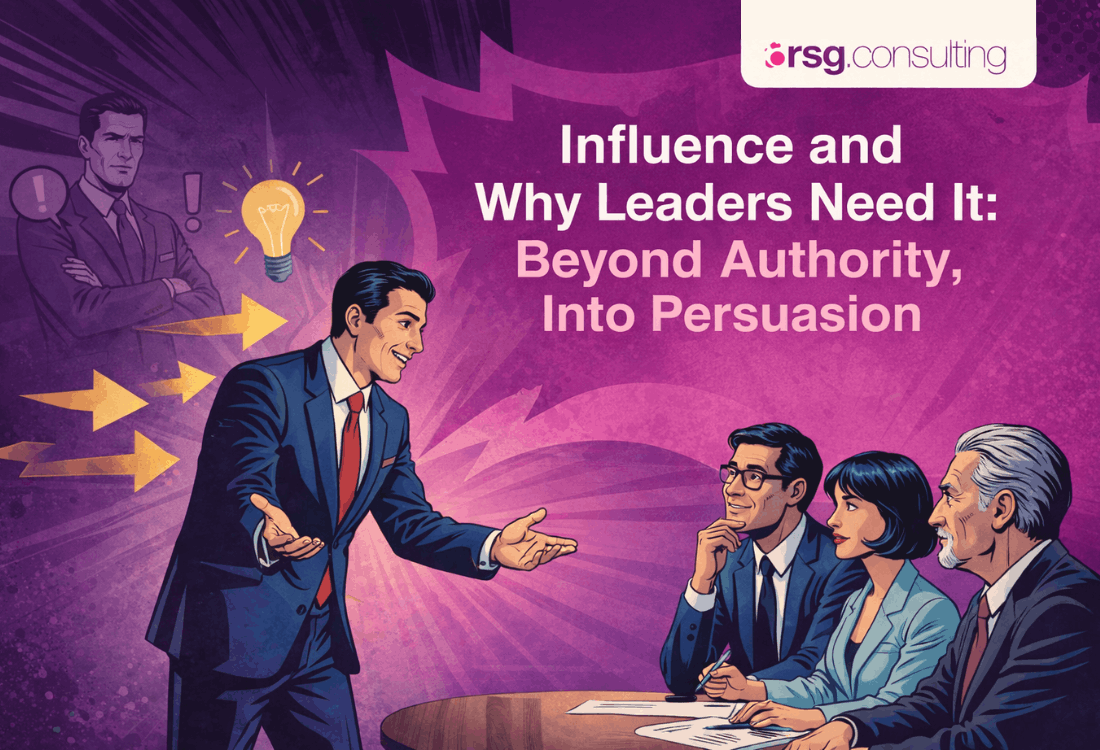
I watched a CEO issue a directive in a board meeting once. Everyone nodded. Three weeks later, nothing had happened. The directive hadn't been ignored. It had been quietly reinterpreted, delayed, and diluted until it became meaningless.

That's the problem with authority. It gets people to listen, but it doesn't make them believe.
Influence is different. It shapes how people think, not just what they do. It's the difference between securing compliance and building genuine commitment. And in leadership, that distinction matters.
Authority Alone Doesn't Work
Authority gives permission. It doesn't guarantee follow-through.
You can tell people what to do, but if they don't understand why it matters, or worse, if they disagree, they'll find ways around it. Not out of defiance, but because humans back ideas they understand, not ones imposed on them.
This isn't theoretical. In my own businesses, I saw it repeatedly. The times I relied purely on positional power, progress stalled. The times I took people with me when they understood the reasoning and bought into the direction, execution happened faster and with less friction.
Research from Hogan Assessments, based on data from over five million leaders worldwide, supports this. Personality drives behaviour in predictable ways, and one consistent finding stands out: leaders who focus on building capable teams outperform those who rely on charisma or authority alone. The most effective leaders don't dominate; they create alignment.
Why Influence Matters More Than It Used To
Traditional hierarchies have weakened in many sectors, particularly in professional services, technology, and financial services, where senior teams are made up of independent thinkers with strong views.
In those environments, persuasion is the only sustainable form of power. It secures investor confidence when certainty is limited. It unites people with competing priorities. It wins debates without creating unnecessary friction.
The most effective leaders aren't those who speak loudest. They're the ones who frame decisions clearly, connect outcomes to what matters, and adjust their approach based on who they're talking to. They understand timing. They read the room.
That's not manipulation. It's clarity under pressure.
How Influence Actually Works
Influence isn't a soft skill. It's an execution tool. And like any tool, it requires deliberate practice.
In my experience working with CEOs and leadership teams, three things separate leaders who influence effectively from those who struggle:
- They understand their own personality and its limits.
Hogan's research shows that personality is best understood through reputation, not identity. Most leaders overestimate their strengths and underplay their weaknesses. They think they're collaborative when others see them as indecisive. They believe they're decisive when their teams experience them as abrasive.
The leaders who influence well know how they're actually perceived. They understand their "dark side" the behaviours that emerge under pressure. Are they prone to micromanagement when stressed? Do they become overly cautious, or recklessly impulsive? Knowing this allows them to manage it.
- They connect logic to what people care about.
Facts don't drive action on their own. People need context. They need to see how a decision connects to their priorities, their risks, or their values.
Military leaders understand this instinctively. You don't just issue orders. You explain intent. You tell people not just what to do, but why it matters and what success looks like. Then you let them work out the best way to achieve it.
Business leaders often skip this step. They assume the logic is self-evident. It rarely is.
- They follow through consistently.
Nothing destroys influence faster than saying one thing and doing another.
In one business I ran, we had a senior leader who talked constantly about empowering his team. Then he'd override their decisions in meetings, often publicly. Within six months, his team stopped contributing. They waited to see what he wanted rather than taking initiative.
Influence builds through reliability, not charisma. People follow those whose intent and actions align.
The Gap Most CEOs Miss
Many senior leaders assume influence is innate: you either have it or you don't. That's not true. Influence is a discipline. It can be learned, measured, and improved.
At RSG, we regularly see technically brilliant CEOs who struggle to move opinion. They know the right answer, but they can't get others to see it the same way. That gap slows execution, weakens alignment, and means they're constantly having to re-sell the same idea.
Closing that gap isn't about becoming more persuasive in a superficial sense. It's about understanding how your personality shows up under pressure, how others perceive you, and how to adapt your approach without losing authenticity.
Building Real Influence
Influence isn't about charm. It's about intent and discipline. Here's what works:
Prepare for the conversation, not just the presentation. Think about what others need to hear, not just what you want to say. What are their concerns? What do they value? What evidence will they find compelling?
Listen before you persuade. Influence starts with understanding. If you don't know what matters to the other person, you can't connect your message to their priorities.
Link emotion to logic. Numbers matter, but only when people understand what they mean. Tie data to values, purpose, or risk. Make it real.
Follow through visibly. Every time people see your words matched by action, your influence strengthens. Every inconsistency weakens it.
This takes practice. It requires feedback. It demands reflection. You won't learn it from theory you refine it in real conversations, under pressure, in moments that test conviction.
What Influence Actually Delivers
A leader's influence isn't measured by how often they speak. It's measured by what changes after they do.
When influence is working, you see it in small ways. Decisions happen faster. Stakeholders align without constant re-explanation. Teams act on intent rather than waiting for instruction.
That's when influence has moved from talk to traction.
Influence That Delivers
Authority can secure compliance. Influence earns conviction.
Influence isn't about being someone you're not. It's about understanding who you are, how you're perceived, how you behave under stress, and how to adapt your approach whilst remaining authentic.
That's the work. And it's the work that separates leaders who get nodded at from those who genuinely move people.
Ready to build influence that drives real results? Get in touch to explore how we help leaders strengthen credibility and move people in the decisions that define your future.
Share this
The Leadership Paradox: Why Everyone Wants to Lead But Nobody Wants to Be Managed
The Leadership Paradox: Why Everyone Wants to Lead But Nobody Wants to Be Managed
A CEO once told me, "Everyone loves to lead the offsite. Nobody wants to run the Monday meeting." He was right. And it's costing businesses more than …
20 Apr 2026
3
min read
Understanding The Dark Side Of Personality: Why It Derails Even The Best Leaders
Understanding The Dark Side Of Personality: Why It Derails Even The Best Leaders
The traits that make leaders successful are often the same ones that derail them.
31 Mar 2026
3
min read
How Your Leadership Style Changes Under Pressure?
How Your Leadership Style Changes Under Pressure?
Most leaders believe they know how they behave under pressure. Most of them are wrong.
29 Jun 2026
3
min read