

By Barry Roche on 08 Sep 2026
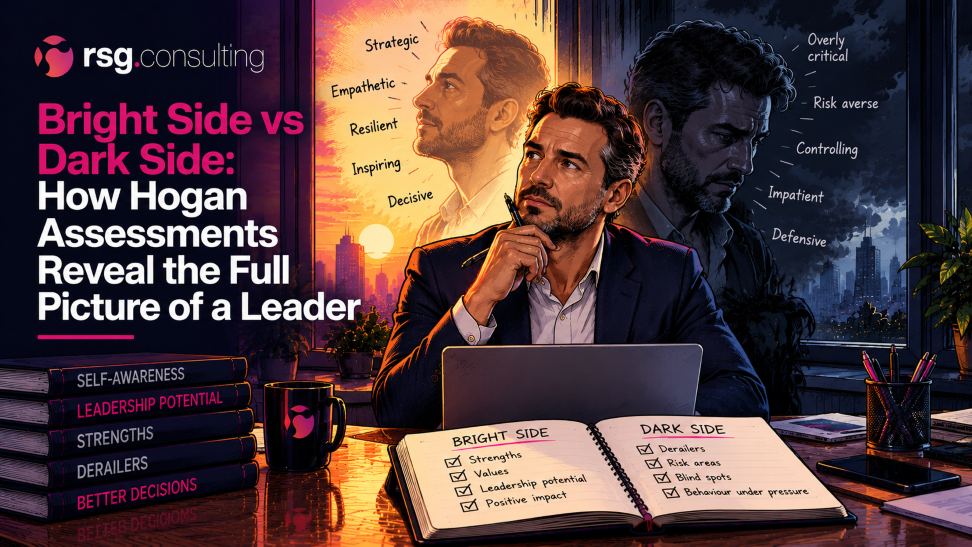 Most leadership assessments are designed to surface strengths. They identify what a leader does well in favourable conditions and build a picture around that.

It's a useful starting point. But it's an incomplete one. And at senior level, an incomplete picture of leadership capability is a significant commercial risk.
The question that most assessment processes don't ask, and it's the question Hogan assessments are specifically designed to answer: what happens to this leader when conditions get difficult?
The Problem With Strengths-Only Assessment
A leader's strengths in stable conditions are genuinely important. Communication, strategic thinking, decision-making under clarity. These matter. But they don't tell you what you need to know when you're making a senior hiring decision, planning succession, or investing in leadership development.
What you need to know is how that leader behaves when they're under sustained pressure, operating in ambiguity, or navigating a high-stakes situation without a clear playbook. Because that's when the gap between a leader's self-perception and their actual impact tends to widen most dramatically.
Traditional assessments rarely explore this. They capture the leader on a good day, in a controlled environment, presenting their best self. What they don't capture. What Hogan assessments for UK businesses are specifically designed to identify is is the full range of behaviour that emerges across different conditions.
What 'Bright Side' Actually Means?
The bright side of personality refers to the traits and behaviours that show up in everyday performance. These are the qualities people around a leader typically see: how they communicate, how they build relationships, how they approach problems, how they motivate their teams.
This is what most assessment tools measure. And it's valuable. But it only tells you how this person operates when things are going reasonably well.
The bright side is important. It's just not the whole story.
Where Leadership Risk Actually Lives?
The dark side of personality is where Hogan assessments add their most significant value.
Dark side behaviours aren't character flaws. They're the tendencies that emerge under pressure, fatigue, or stress, the responses that surface when a leader's social management is stretched and their default patterns take over. These behaviours are often invisible in hiring processes and in stable operating conditions. They become visible at precisely the moments that matter most.
A leader who appears composed and decisive in calm conditions may become overly risk-averse when the pressure is sustained. A collaborative leader may withdraw from decision-making under uncertainty. A confident communicator may become defensive when challenged. These are predictable, measurable patterns, but only if you're using tools designed to surface them.
Why Pressure Changes Everything?
Leadership rarely happens under ideal conditions. Market volatility, organisational change, competitive pressure, and operational challenge are constants at senior level, not exceptions.
It's in these moments that the gap between a leader's strengths and their dark side tendencies becomes commercially significant. The leader who managed their team effectively in a period of growth may manage them very differently when facing a restructure. The executive who built strong relationships in a collaborative culture may behave quite differently in a high-pressure, high-accountability environment.
At RSG, we use Hogan assessments as part of our work precisely because they capture this full picture. They give organisations insight into how individuals think, behave, and respond across the full range of conditions they'll actually face.
How This Translates Into Better Decisions?
Understanding both sides of a leader's personality has practical implications across three key areas.
Hiring and selection. Interviews tell you what a candidate wants you to know. Hogan HPI and HDS data tell you how they're actually likely to operate under conditions that matter. That combination produces better decisions.
Leadership development. Development programmes that focus only on strengths leave the most significant risks unaddressed. Incorporating Hogan assessments into development work allows organisations to build targeted plans, ones that give leaders genuine insight into their derailers and equip them to manage those tendencies deliberately.
Succession planning. The stakes in succession decisions are high and the consequences of getting them wrong are long-lasting. A more complete view of leadership capability, one that includes both bright side strengths and dark side risks, supports significantly better decisions at this level.
A More Complete View of Leadership
The distinction between the bright side and dark side isn't a judgement on the quality of a leader. Every leader has both. The difference between those who sustain performance over time and those who don't often comes down to awareness, and the willingness to do something with it.
Hogan assessments provide the structure to make that awareness concrete and actionable. For the organisations we work with, the result is more informed decisions about people: at the point of hiring, during development, and when planning for the future.
Want to understand how your leadership team really operates, not just on a good day, but under pressure?
Speak to our team to find out how Hogan assessments give you the complete picture.

Share this
Previous story
← Understanding The Real Cost of a Bad Hire at Senior Level